
Glass art
Glass as a medium brings me various shaping possibilities; the material itself offers me a wide variety of articulation ideas. I am interested in using it as a prism through which light that creates reflections and shadows penetrates, projecting them into the space that surrounds them, thus creating new sculptural forms, and various ambient situations that simulate and associate with the phenomenon of glass fusion in nature.
The most interesting thing about working with glass is that the transparency of the material gives me the simultaneity of looking at the sculptures and interiors of the sculptured glass.
The design process itself is very uncertain until the very end. It gives me a kind of playfulness and surprise, unlike other sculpting techniques where the finished product is carefully planned. With an element of complete freedom and the unexpected, each time, it gives me admiration for such compelling material.

Collections
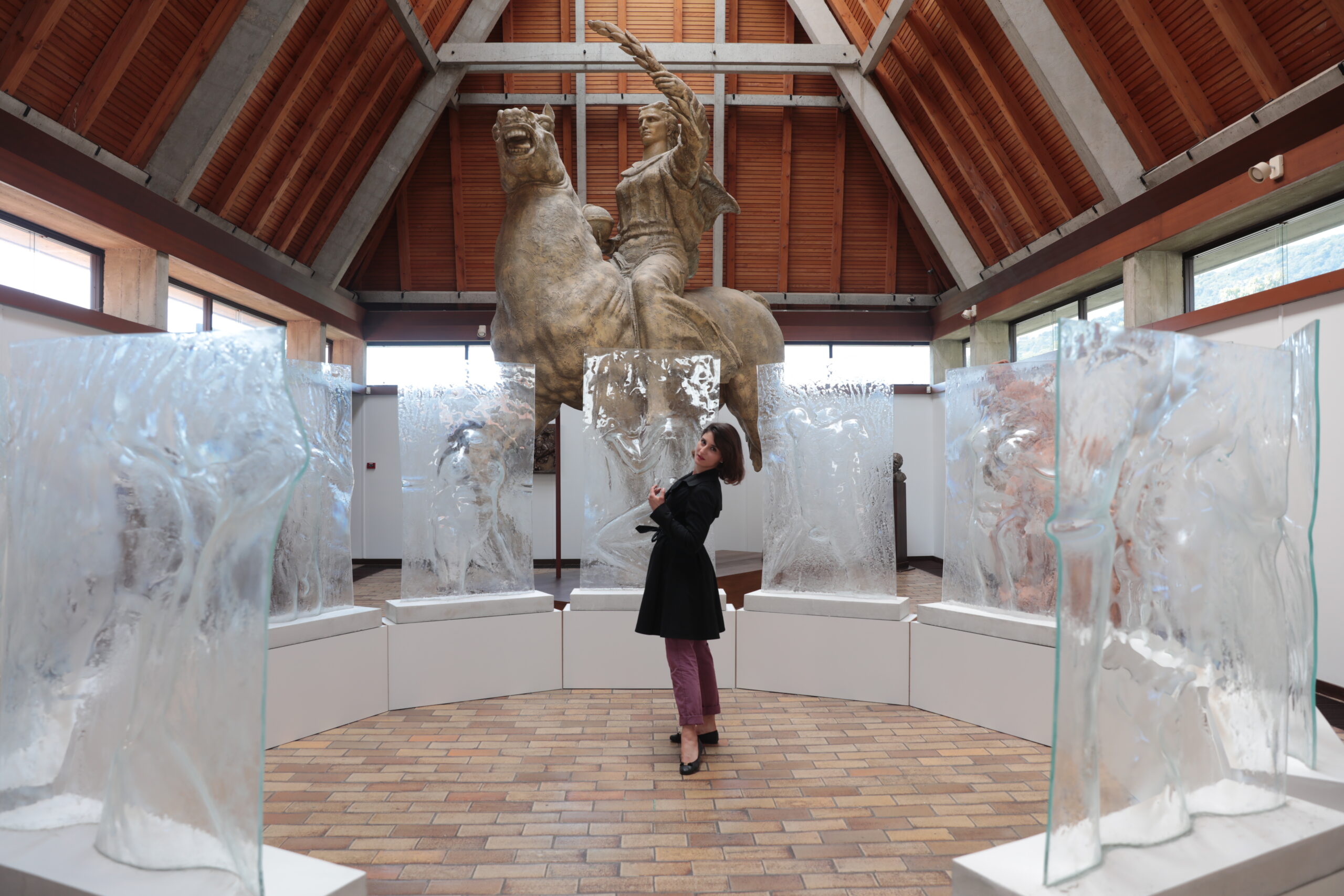
The central idea of the exhibition is the notion of fragility. It explores the fragility of peace and its metaphor, its materialization in equally fragile glass, and the delicate balance needed for peace to exist and spread, like ripples on water.
We are aware of how difficult it is to establish peace, whether it be inner peace (from spiritual or mental tranquility within a person to harmony among individuals) or external peace (from social to international peace), and how little it takes for it to be shattered, which we witness daily on both personal and global levels. We are also aware that balance is essential for the establishment of peace. In fact, peace often is a balance: social, psychological, physical, artistic… The presence of balance manifests through various phenomena of the internal and external, the affirmative and negative, the full and empty, the positive and negative… It resists unambiguous definition and firm form, as its shape and state depend on the environment. Invisible until it permeates everything around it, balance has always found its metaphor in calm water.
The sculptural equivalent to water is glass; fragile, neutral, and transparent. In recent years, Alana Kajfež has found her inspiration precisely in glass, exploring its properties and expressive possibilities.
In this exhibition, Alana presents reliefs made using the technique of glass fusion. On (basically) a rectangular surface of thick glass, the torsos of people close to her stand out in relief. By taking casts directly from the bodies of real people, she maintained a strong connection to reality and ensured that it did not dissipate into the ethereal realms of abstract concepts and shapes. However, this reality should be understood conditionally because the mentioned technique of glass fusion is unpredictable, and each opening of the kiln lid brings the excitement of the first glimpse into the (un)expected and unrepeatable result. Depending on the observer’s point of view, Alana’s glass torsos can be seen both as positives and as negatives, and the irregular surface of the glass causes varied perspectives and the magic of light refraction. Therefore, these glass works, transparent and fragile barriers, can be viewed in countless ways. Alana arranges them into a kind of frieze that she bends into a circle. The glass reliefs evoke a spectrum of associations, but the symbolism is clear: glass embodies peace and its fragility seeking our presence to then multiply through space and time, like ripples on the surface of calm waters.
Curator, Davorin Vujčić


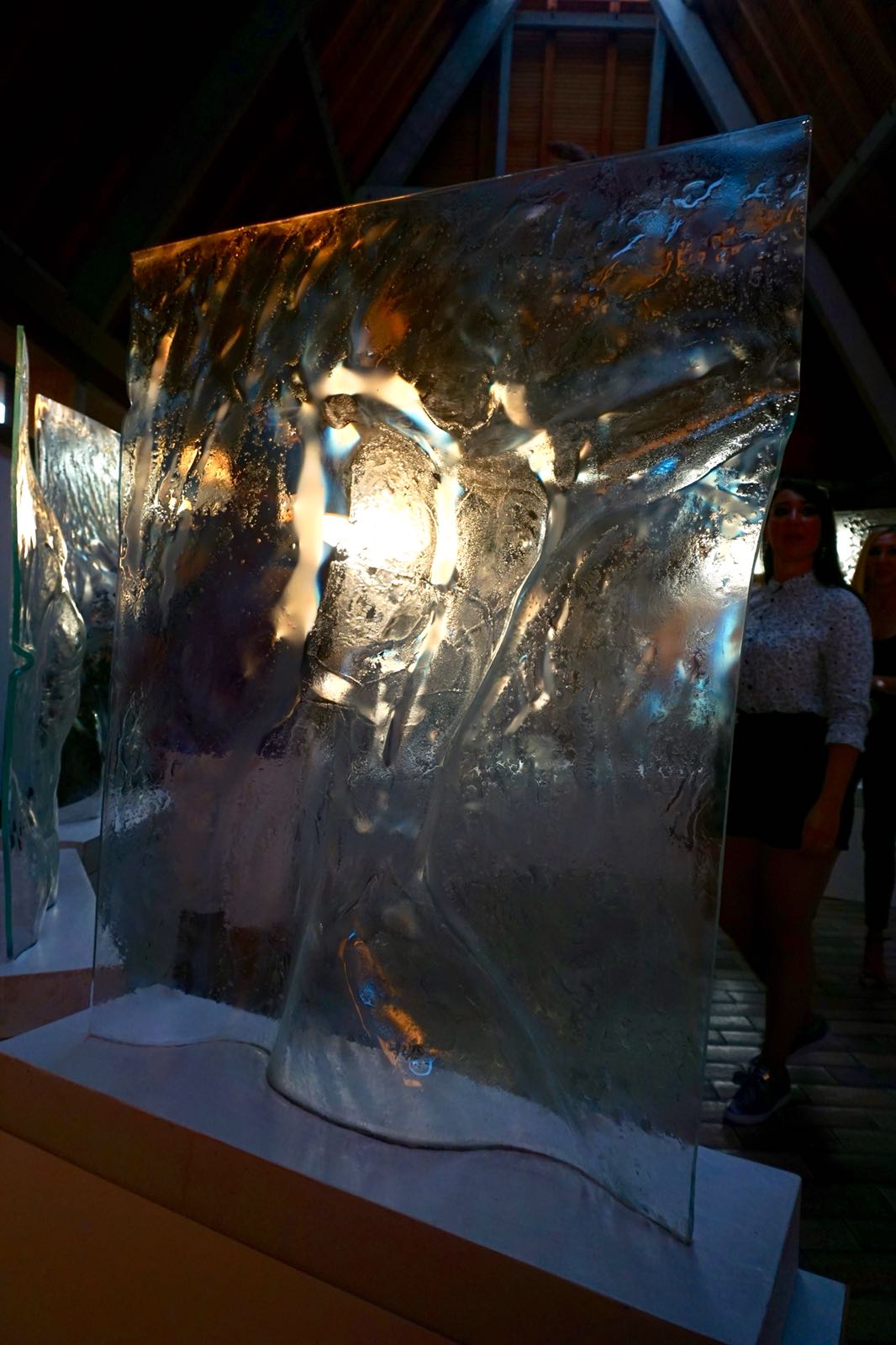


The first time I heard about Ljerka Šram was, unfortunately, during the 1990s, when a bourgeois restaurant bearing her name opened on Mesnička Street, across from her family home (on the corner with Streljačka Street). This obscure tavern, with its forced licitar and purger ambiance, reflected the lifeless, toasting conservatism of that era. Unfortunately, I say, because it was much later that I read Josip Horvat’s divine “Croatian Panopticum,” where I got acquainted with this fatal lady of the Zagreb theater, the unrequited love of Milivoj Dežman, her childhood friend, doctor, and newspaper editor. Ljerka Šram rejected him to marry a coarse white-collar criminal and eventually died of tuberculosis in the Brestovac sanatorium, which Dežman, perpetually enchanted by her, established using his medical knowledge and connections, largely because of her and her illness. This romantic story, monumental in its simplicity, sparked a certain respect in me for this old actress.
Fortunately, the bourgeois restaurant has been gone for a long time, and now in its place is a club for board game and video game enthusiasts, where I occasionally sit. From Šram’s house across the street, Alana Kajfež, a sculptor of boundless energy who has her studio in that house, often enters (and exits, sometimes more than once within an hour). Populist texts on portals and in newspapers have created the myth of Ljerka Šram’s ghost wandering the abandoned Brestovac sanatorium (that “Western bourgeois press, eager for intrigues and sensations,” as Kiš would say about reports of another ghost’s apparition). However, it seems to me that the theatrical presence and physical expression, which transformed Ljerka Šram in numerous comic and tragic roles, fit extremely well with this sculptor’s energetic performance, and that in the studio located in her former house, the two are in daily, spiritual communication.
I think the new sculptures by Alana, which thematize Ljerka Šram’s life, are the result of this energetic transfer. Her figure has been cast three times and painted to suggest different stages of her life. The surfaces of these transparent portraits change, like the actress’s masks on stage. There is also another parallel – the malleability of clay, the material in which the artist embodies the spirit haunting her studio, is similar to the flexibility and adaptability of the performer’s body and affect on stage. Thus, the new incarnations of an actress have come into being thanks to her collaboration with a sculptor, brought together by the discreet genius of the place.
Feđa Gavrilović


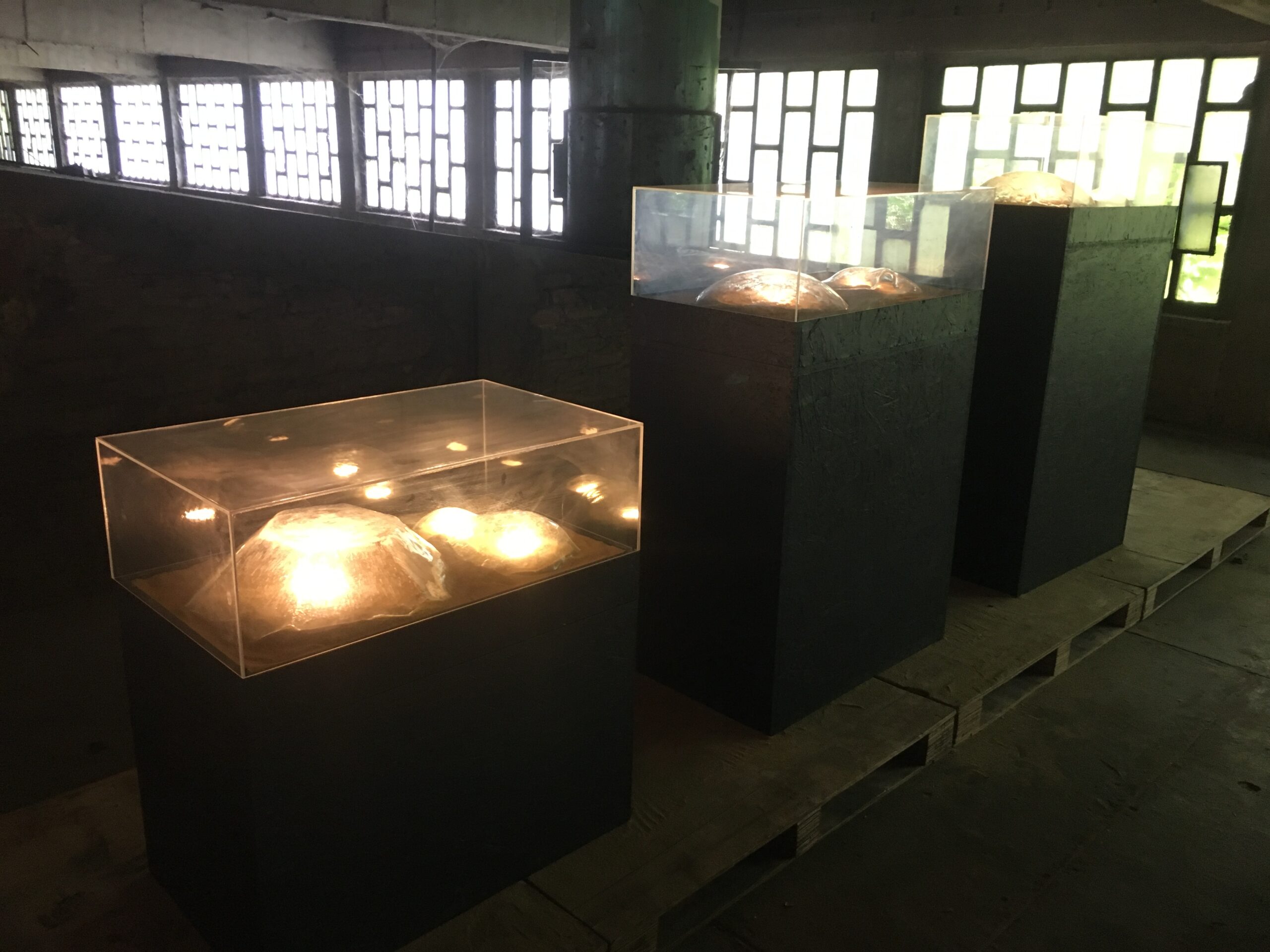
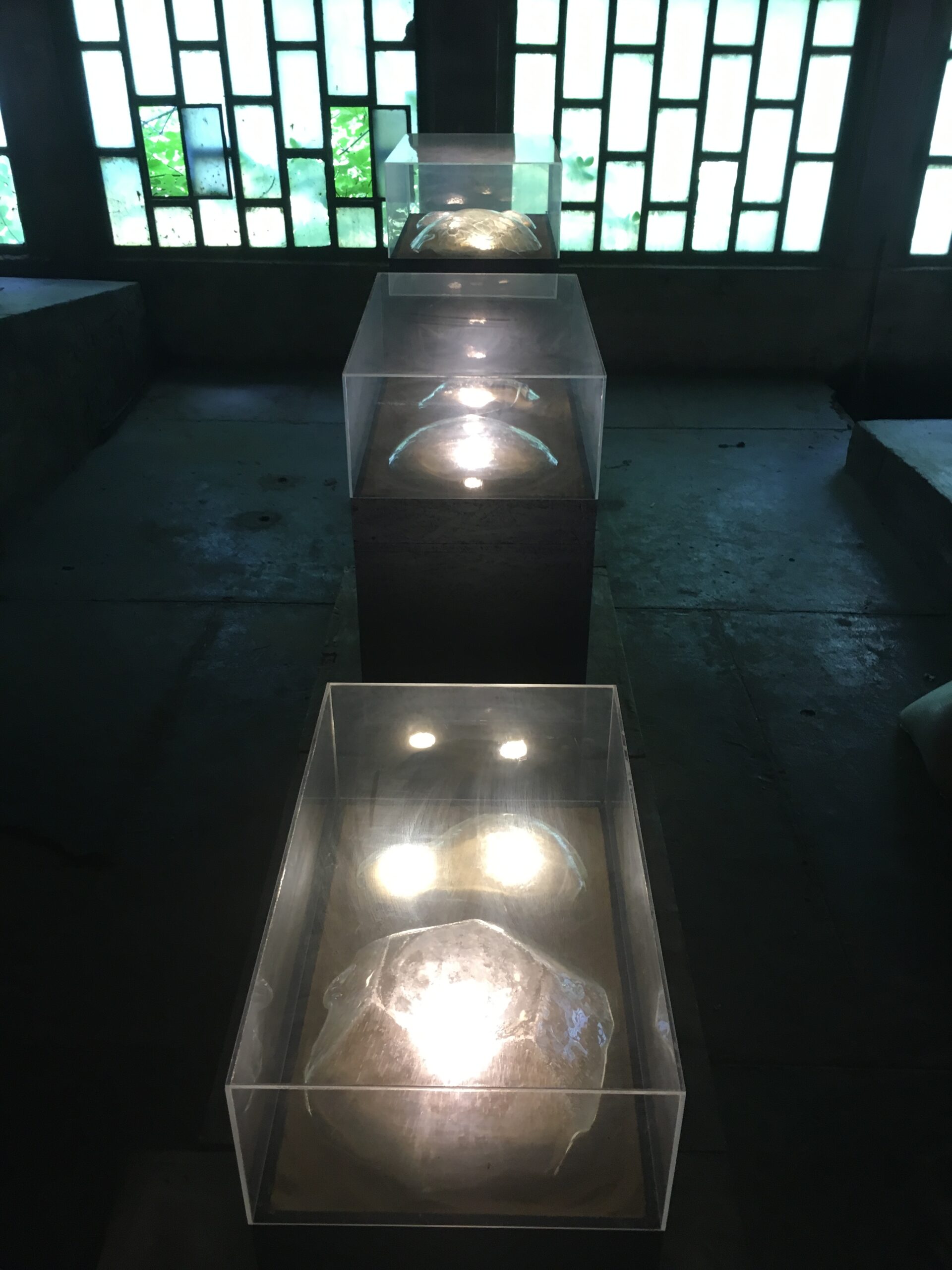
“Light Through Matter” is a light installation that combines three elements.
Sand symbolizes elemental matter (sand, earth, solid matter…), and glass represents transparency and the power of self-shaping (unplanned effects on glass during baking – crackle). These are connected or linked by light that passes through both – the energetic aspect of both contents. The glass shapes created by the fusion of glass depict the process from ethereal to crystalline form, which chemically and abstractly materializes the form (from crystalline to amorphous and amorphous to crystalline).

With this work, I present the first in a series of female nudes accompanied by the symbolism of a specific mythological/religious figure. In this case, I depict the mother of demons, Adam’s first wife, who was banished to hell because of her desire for independence and emancipation. She is not just a woman; she should be revered on the same level as her male counterpart. However, due to her demonization through religion, she was portrayed as a demon, evil, and opposition to God. In the end, she is simply a woman who decided to have equal rights as a man (Adam).
According to Judeo-Catholic religions, Lilith and Adam were created together by God from dust, and thus created equal, but this equality was not honored. She was banished to hell because she decided to stand up for herself and preferred to dwell in the underworld rather than be someone’s slave. Consequently, her fate was sealed so that she could never have human children, but she created her own army. She chose to embrace the serpent, the personification of evil and the devil, but in doing so, all women who opposed stagnation in unequal gender relations were depicted similarly.
With this depiction of a glass body wrapped in a serpent, I want to elevate her feminine strength as a triumph and example of a woman’s fight for freedom and equality, rather than a demon as portrayed in sacred art.

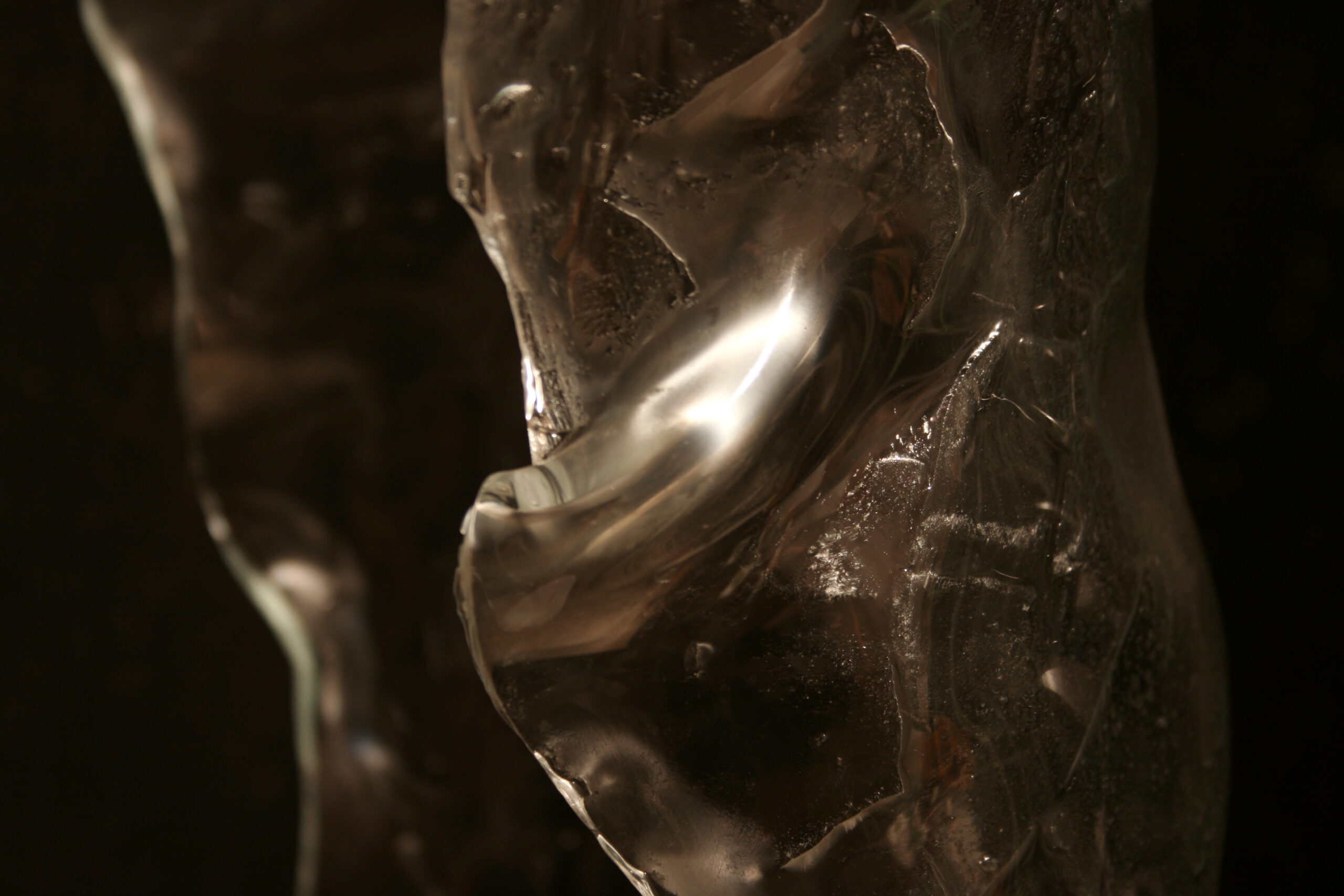

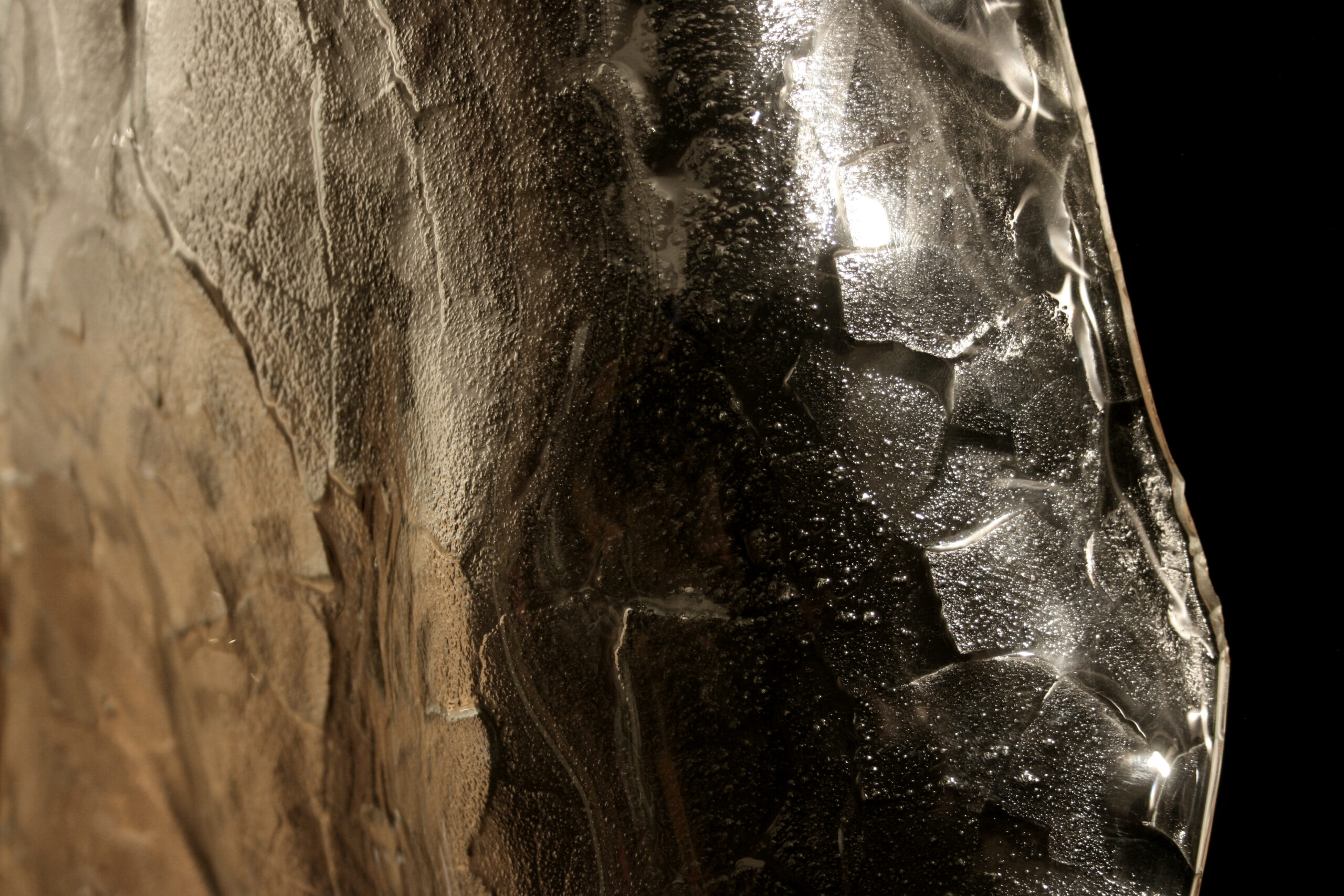
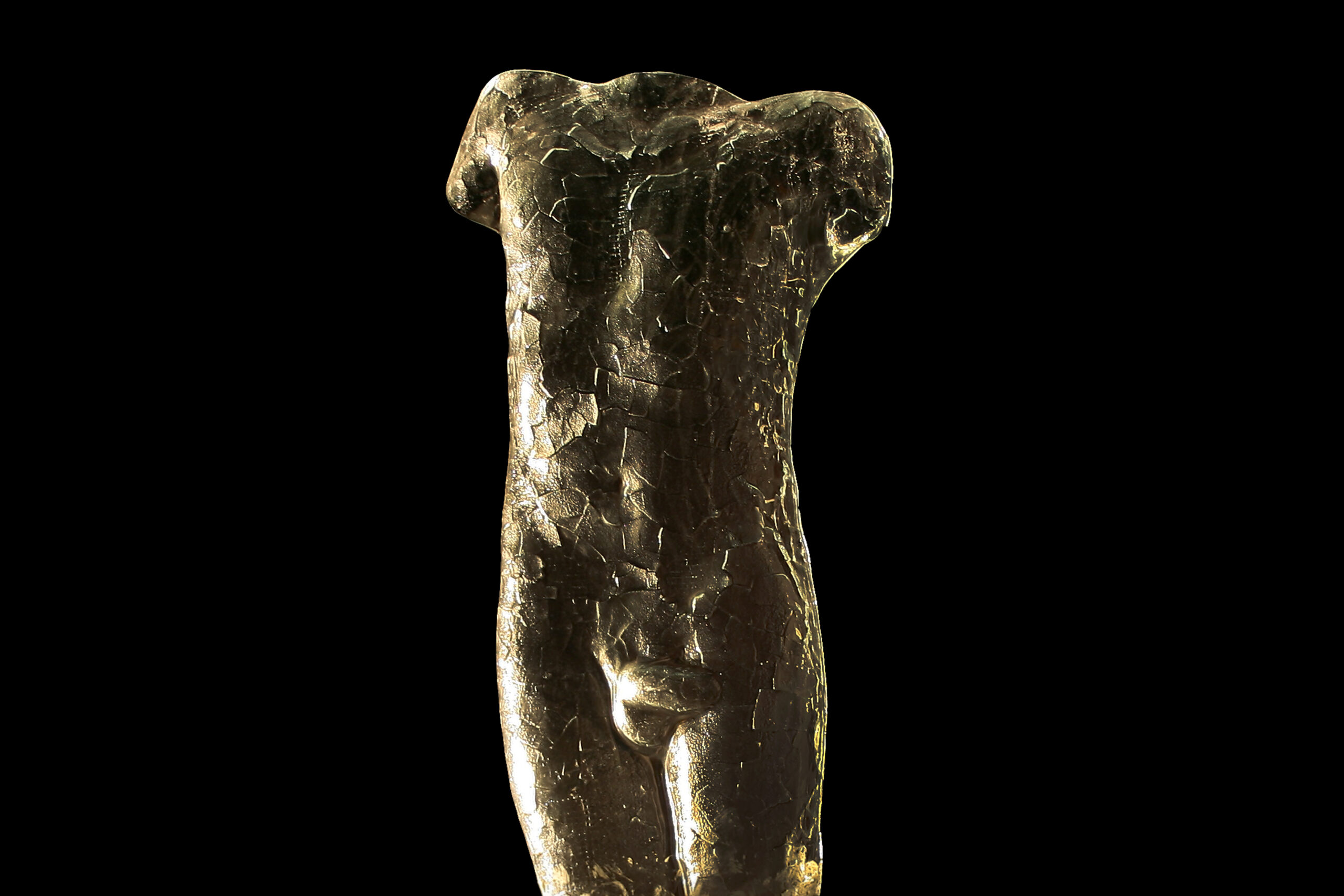


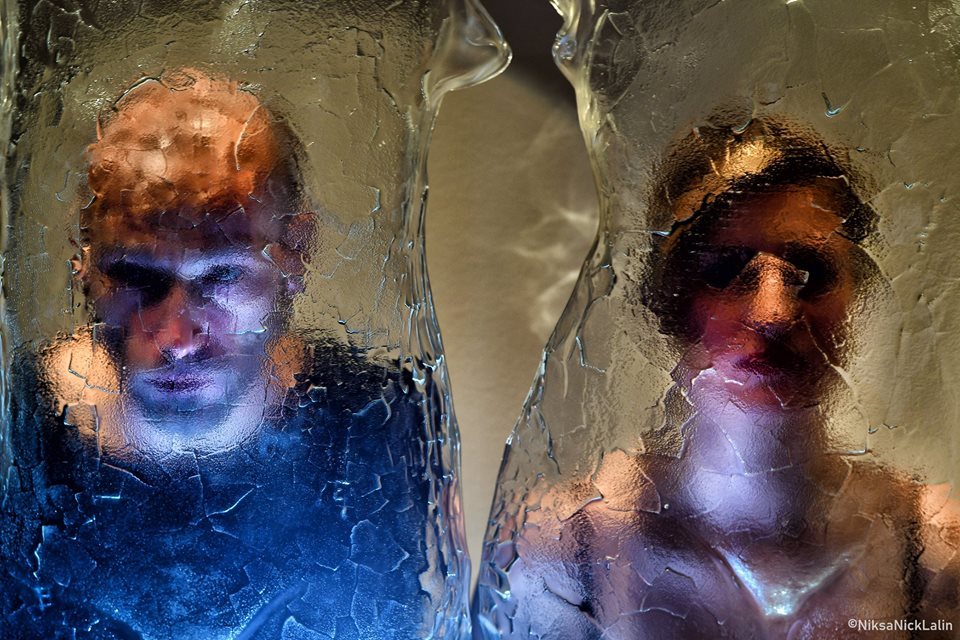
The primordial beauty of the naked female body, its architecture as a perfect work of nature, inspired Alana Kajfež to showcase her sculptural skills through a cycle of glass casts of female torsos. The architecture and evolution of the human body as a perfect work of nature has always been a subject of admiration, research, and interpretation in visual art. The metamorphosis the body undergoes from its inception and original purpose to the contemporary era changes rapidly. In visual art, the nudity of the body has always carried an aura of something untouchable, and its natural beauty takes on a role of exaltation. The discovery of the human body, which allows the appearance of naked corporeality and the ruthless exposure of the body with all its sexual signs, can be linked to the nudity that is inseparable in our culture from the “theological mark” and the story from the Book of Genesis about Adam and Eve when they realized they were naked after committing sin. One of the consequences of the theological connection that tightly links nudity in our culture is the fact that nudity is not a state but an event. This means that nudity in our experience is always undressing and stripping, never a form or a permanent possession.
The beauty of the human body inspired Alana Kajfež to depict the realization of nudity, to stimulate the observer and their mind with a desire, with the charm that images of the naked female torso have on the human mind. The cycle of five glass torsos titled “Transparency” depicts casts of real people from the artist’s life. Using the sculptural technique of glass fusion, Alana portrays the beauty, harmony, and fragility of the female body. The fragility and translucency of the glass female torso, broken into fractals, remind us of the transience of life, beauty, tranquility, light, and darkness. Alana Kajfež elevates the relationship with the body from the divine to the ultimate means of achieving a goal by exploring its properties and possibilities. In contemporary times, the naked body is still considered provocative; its natural beauty is reduced to primordial nudity, which, according to Kant, becomes “infinitely imperceptible, infinitely devoid of mystery.” However, the nudity of Alana Kajfež’s glass torsos represents the unchanging beauty of the female body, always shrouded in a veil of mystery in the eyes of the artist and the observer, unlike a body devoid of all aesthetics, lacking beauty and exaltation, floating between the living and the artificial, between life and art.
Lidija Fištrek